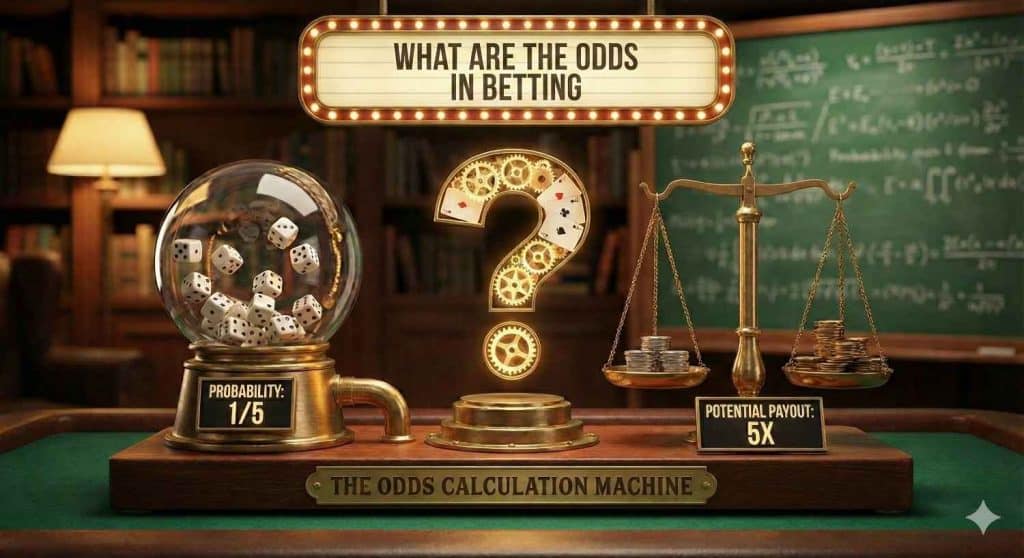
Betting odds tell you how likely an event will happen. They also show how much money you can win from a bet. Every sportsbook and casino uses odds to set payouts. Understanding odds helps you make smarter betting decisions.
Odds work like a bridge between probability and money. When you see odds on a match or game, they represent the bookmaker’s view of the outcome. Higher odds mean lower chances of winning but bigger payouts. Lower odds mean higher chances but smaller returns.
Bookmakers always add their profit margin to the odds. This means the payout you receive is slightly less than the true probability suggests. This built-in advantage helps betting companies make money over time.
Types of Betting Odds You Will See
Betting platforms display odds in three main formats. Each format shows the same information in a different way.
Fractional Odds appear as fractions like 5/1 or 3/2. The first number shows your potential profit. The second number shows your stake. A 5/1 bet pays you 5 units for every 1 unit you wager. UK and Irish bookmakers commonly use this format.
Decimal Odds show your total return for every unit you bet. If the odds are 4.00, you get 4 units back for every 1 unit wagered. This includes your original stake. European and Australian betting sites prefer decimal odds.
Moneyline Odds use plus (+) and minus (-) signs. A minus sign shows the favorite. It tells you how much you must bet to win 100 units. A plus sign shows the underdog. It tells you how much you win from a 100-unit bet. American sportsbooks use this format.
Suggested Reads:
How Bookmakers Set the Odds
Bookmakers analyze many factors before setting odds. They study team form, player injuries, head-to-head records, and weather conditions. They also consider how much money bettors place on each outcome.
The odds shift based on betting patterns. If many people bet on one team, the bookmaker adjusts the odds. This balances their risk and ensures profit regardless of the result.
Smart bettors compare their own probability estimates with the bookmaker’s odds. When your estimate shows a higher chance than the odds suggest, you may find value in that bet. This approach requires research and careful analysis of the event.
Remember that bookmakers have teams of analysts working for them. Beating the odds consistently takes skill, patience, and discipline.