Fantasy sports and betting both involve sports and money. That is why so many people think they are the same thing.
But the law does not see them that way, and neither do the platforms that run them. Most people assume fantasy is just gambling with a different name. That is not true.
This article breaks down how each one works, why the law treats them differently, and what the real difference in risk looks like.
Fantasy vs Betting — Quick Comparison
Fantasy is a skill-based competition among users. Betting is a wager placed against odds.
| Feature | Fantasy Sports | Sports Betting |
|---|---|---|
| Primary Objective | Build a team to earn points via performance | Predict match/event outcome |
| Who You Compete Against | Other users | Bookmaker / House |
| Legal Classification | Game of Skill (in many jurisdictions) | Gambling (Game of Chance) |
| Control After Entry | Active decisions matter | No control after the bet is placed |
| Engagement Level | Strategic and ongoing | Outcome-based and instant |
| How You Win | Better analysis than other players | Correct prediction |
Betting and fantasy formats are built differently from the ground up. One asks you to make better decisions than other players. The other asks you to guess what will happen and wait.

That core difference is what shapes how each one is regulated and how risk works for the person playing.
Why Fantasy And Betting Are Treated Differently by Law?
The law asks a simple question to differentiate the two: Does the user’s action actually change the result?
In betting, you put money on something and wait. Nothing you do after that changes what happens in the match. The result is out of your hands. That is why betting is treated as a game of chance.
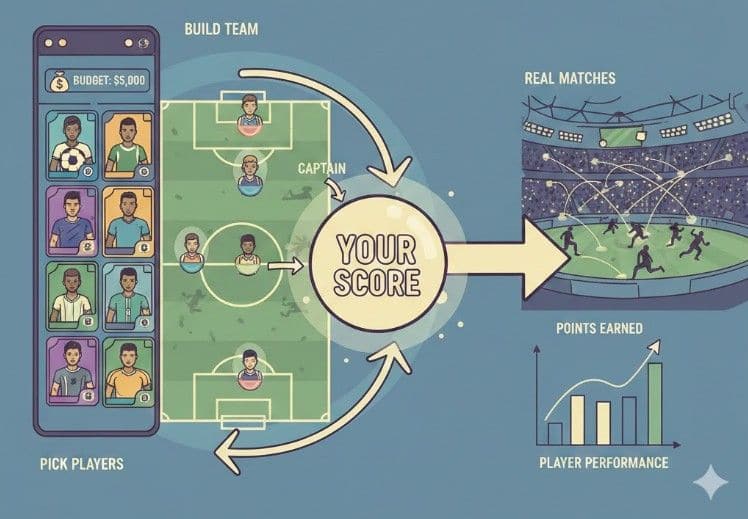
Fantasy is different. You pick players, work within a budget, and earn points based on how those players perform in real matches. Who you pick, who you make captain, how you build your team all of this changes your score.
Indian courts looked at this when Dream11, one of the largest fantasy platforms in India, faced legal questions about whether it was the same as gambling. The courts said no.

The legal line is not the same everywhere. Some countries fully ban betting on cricket, while others allow it under specific rules. Fantasy sports involve enough skill to be treated differently. The Supreme Court of India agreed and let those rulings stand.
How Does Fantasy Sports Actually Work?
Think of fantasy sports like managing a small portfolio. You are not guessing one thing and waiting. You are making a series of decisions that affect your result across the whole match.
Here is how it works. You pay to enter a contest. You pick real players and build a team within a budget.

As the real match is played, your players earn points for what they do like runs, wickets, goals, and assists. When the match ends, everyone’s scores are added up, players are ranked, and prizes go to those at the top.
Every choice here has weight. Your captain earns double points, so a wrong captain pick can drop you many places.
Checking a player’s recent form or fitness before picking them changes your team. Balancing your team across positions and price points takes thought.
The person who puts in more effort tends to do better, especially over time. That is what makes fantasy a competition and not a bet.
The reality of whether cricket betting is profitable is more complicated than most people expect, especially once platform margins and legal risks are factored in.
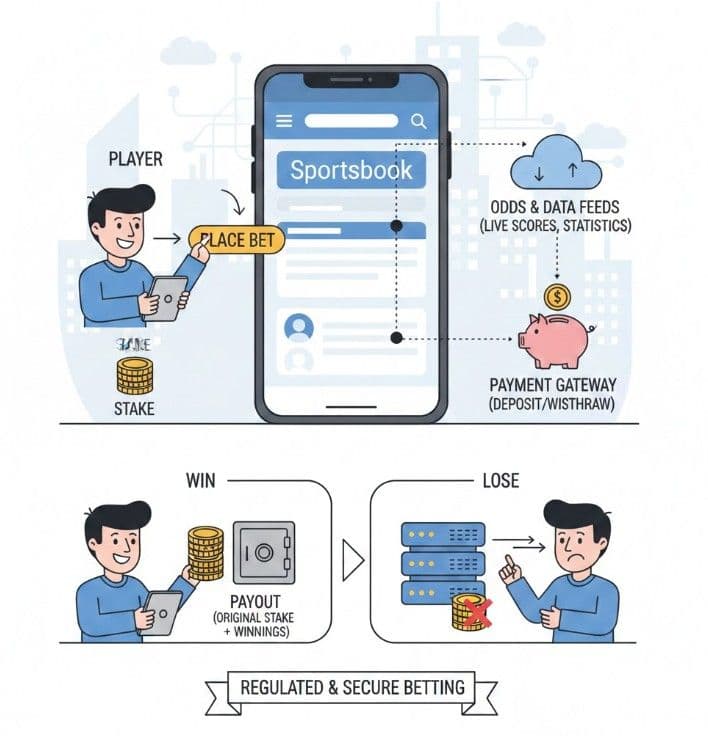
How Sports Betting Works (Prediction + Odds System)
In betting, you pick an outcome, which team wins, how many goals are scored, or something else that happens during the match.
The platform sets odds on each outcome before the match starts. Those odds decide how much you get paid if you are right.

Once you place the bet, you are done. The match plays out and your bet either wins or loses. You cannot change anything, adjust anything, or make a second call.
Betting platforms build a small margin into the odds. This means even when you win, you get back slightly less than what a truly fair payout would be. That gap is how the platform earns money, no matter who wins or loses on any given day.
Betting vs Fantasy Money Model
The way money moves in each format tells you a lot about who holds the risk and how prizes are paid.
| Aspect | Fantasy Platforms | Betting Platforms |
|---|---|---|
| Revenue Model | Commission on contest fees | Built-in odds margin (“vig”) |
| Who Holds Risk | Users competing with each other | Operator balances risk |
| Prize Source | Shared user pool | Paid by bookmaker |
| Transparency | Fixed prize pool | Variable payout based on odds |
In fantasy, you compete against other users. The platform takes a small cut of the total entry fees and puts the rest into the prize pool. You can see the prize pool before you join. You know what you are playing for.
In betting, the platform sets the terms and controls the odds. Payouts change based on those odds. The platform manages risk across all bets, not just yours. It is peer-to-peer in fantasy. In betting, it is always you against the operator.
Betting and Fantasy: Skill vs Chance
Both formats benefit from knowing sports. But what that knowledge can actually do for you is very different.
Fantasy Rewards Research and Consistency
In fantasy, the work you do before the contest shapes your result. Looking at player stats, checking for injuries, studying the match conditions, all of this changes who you pick and how you set up your team.
Someone who does this regularly will tend to rank better than someone who picks randomly. Over many contests, good habits show up in results. One bad contest does not ruin everything if your process is right.
Betting Rewards Prediction Accuracy (But Not Control)
In betting, being informed can help you make a better call. Knowing recent form or head-to-head records can point you toward a smarter pick.
But once the bet is placed, none of that matters anymore. One moment, a red card, a missed shot, a late goal can change everything, no matter how well you thought it through.
In fantasy, your decisions keep affecting your result throughout the match. In betting, your role ends the moment you confirm the wager.
Fantasy vs Betting Risk Comparison
Risk exists in both formats. But the way it hits you is different, and that difference matters.
| Risk Factor | Fantasy Sports | Betting |
|---|---|---|
| Loss Pattern | Gradual variance | Sudden wins/losses |
| User Control | High | None after wager |
| Engagement Style | Analytical | Event-driven |
| Addiction Risk Trigger | Competition | Instant gratification |
In fantasy, a bad contest costs you that entry fee. It does not wipe everything at once. The format keeps you engaged through thinking and planning, so your focus stays on the process.
In betting, you know the result fast. That quick win-or-lose cycle works differently on the brain. The speed of the feedback is what drives different risk patterns between the two.
Several apps that appear legitimate are actually blocked or operating outside Indian law. The complete list of banned betting apps in India covers which platforms have been restricted and why, which is useful before putting any money on the line.
Neither format is risk-free, but they create different kinds of pressure.
Why People Often Confuse Fantasy With Betting
It is easy to see why people mix them up. Both cost money to enter. Both involve sports. Both can pay out cash.
You see ads for both in the same places during matches, on sports apps, in similar language. That overlap makes them look like the same thing from the outside.
One is competing. The other is wagering. That is not just a legal line — it changes who you are playing against, how your money works, and whether your decisions actually matter.
Suggested Reads:
Conclusion: Fantasy Gaming Is Better Than Betting Since It Depends On Skills
Fantasy and betting are not the same, even if they look that way on the surface. Fantasy is a competition where you build a team, use real player stats, and go up against other users.
Betting is placing money on an outcome that you cannot control once the bet is placed. The law separates them because they work differently at the core. One is built on decisions.
The other is built on prediction. Knowing how each one actually works is more useful than just going by the name. Understanding the structure matters more than the label.
FAQs
Fantasy is a competition where you build a team and earn points based on real player performance. Betting is placing money on a match result. One is skill-based, the other is a prediction against odds set by the platform.
Skill plays the bigger role. Your picks, captain choice, and player research all affect your score. Luck exists, but over many contests, better decisions lead to better results.
Yes, in most states. Indian courts, including the Supreme Court, have ruled that fantasy sports involve enough skill to be treated separately from gambling.
Not legally. Fantasy is a competition between users, not a wager against a platform. Courts in India and other countries have recognised it as a game of skill.
Paid contests pay prizes from the shared entry fee pool. Your final rank decides what you win. The prize breakdown is shown before you enter.
Some knowledge can help you pick better. But once the bet is placed, you have no control. One unexpected moment in the match can change everything.