The IPL is bigger, richer, and more watched than the PSL on virtually every measurable metric in 2026. That is the short answer.
However, the Pakistan Super League is not just a smaller cousin. It brings fierce fast bowling, tighter contests, and a passionate fanbase that grows each year.
With both leagues clashing directly on the calendar for the second straight year, the IPL vs PSL debate has exploded on social media and beyond.
This article breaks down everything: revenue, salaries, brand value, viewership, players, records, and the ongoing player exodus from the PSL to the IPL.
IPL vs PSL 2026: Quick Snapshot Comparison
Before getting into the details, here is a side-by-side snapshot of where both leagues stand heading into 2026.
| Category | IPL (2026) | PSL (2026) |
|---|---|---|
| Founded | 2007 (first season 2008) | 2015 (first season 2016) |
| Governing Body | BCCI | PCB |
| Current Season | 19th edition | 11th edition |
| Number of Teams | 10 | 8 (expanded from 6) |
| League Matches | 84 | 44 |
| Season Window | March to May | March to May (overlap) |
| Team Salary Cap | ~₹120 crore (~$14.5M) | ~$1.6 million (~₹14 crore) |
| Highest Player Salary | ₹27 crore (Rishabh Pant) | ~$500,000 (Steve Smith) |
| Media Rights Deal | ~$6.4 billion (2023–2027) | ~$93 million (2026–2029) |
| League Valuation | ~$18.5 billion | ~$260 million (combined) |
| Player Acquisition | Auction | Auction (new from 2026) |
| Broadcast Reach | 140+ countries | South Asia + select markets |
IPL vs PSL 2026: Key Takeaways At A Glance
| Area | Winner | Key Insight |
|---|---|---|
| Revenue & Media Rights | IPL (by a huge margin) | IPL earns ~$13.4M per match; PSL’s 4-year deal is ~$93M |
| Player Salaries | IPL | One IPL star’s salary rivals an entire PSL team budget |
| Brand Value | IPL | Lowest IPL franchise > highest PSL franchise |
| Viewership | IPL | 1 billion viewers; 840 billion minutes in 2025 |
| Competitive Balance | PSL | 6 different winners in 10 seasons |
| Fast Bowling Quality | Tie | Pakistan’s pace factory is unmatched but IPL also Producing Big match Winners for India. |
| Multi-League Ecosystem | IPL | IPL owners run teams in SA20, MLC, ILT20, The Hundred |
| Growth Trajectory | Tie | Both growing; IPL is Growing way too fast than PSL |
| Talent Development | IPL | platform for Indian domestic cricketers as well as Established International Players |
| Global Reach | IPL | Broadcast in 140+ countries vs regional for PSL |
Origins and Growth: How Both Leagues Started
The Indian Premier League (IPL) was born after India’s surprise win at the 2007 T20 World Cup.
The BCCI launched the league in 2007, and the first season kicked off in April 2008 with eight franchises.
It was an instant commercial blockbuster. Bollywood stars, business tycoons, and international cricketers made it a cultural event, not just a cricket tournament.
The Pakistan Super League (PSL) arrived eight years later in 2016 under the PCB’s guidance.
Security concerns meant early seasons were played entirely in the UAE. It took until 2019–2020 for the league to bring most matches back to Pakistani soil.
That timeline matters. The IPL had nearly a decade’s head start in building its brand, broadcast deals, and relationships with global advertisers.
Still, the PSL has proven resilient. It now heads into its 11th season in 2026, having expanded to eight teams after adding the Hyderabad Kingsmen and RawalPINDIZ
Revenue and Media Rights: Where the Real Gap Lives
This is where the IPL vs PSL comparison becomes staggering.
The BCCI sold IPL media rights for 2023–2027 at approximately ₹48,390 crore (roughly $6.2–6.4 billion) across TV and digital platforms.
That translates to roughly $13.4 million per match, making the IPL the second-richest league per game in the world behind only the NFL.
Meanwhile, the PSL’s new 2026–2029 broadcast deal with Walee Technologies is worth PKR 26.11 billion (approximately $93 million across four seasons).
This was actually a record-breaking deal for the PSL, a 149% increase over the previous cycle.
However, that entire four-year PSL deal is less than what the IPL earns in media revenue from roughly seven matches.
Revenue Comparison Table
| Revenue Metric | IPL | PSL |
|---|---|---|
| Media Rights (current cycle) | ~$6.4 billion (5 years) | ~$93 million (4 years) |
| Per-Match Media Value | ~$13.4 million | ~$775,000 (est.) |
| Annual Revenue (est.) | $1 billion+ | $50–60 million |
| League Valuation | ~$18.5 billion | ~$260 million (total) |
| Prize Money (Winner) | ~$2.4 million | ~$500,000 (est.) |
The gap is not about effort or passion. It is about market size.
India’s advertising economy, population base, and digital penetration dwarf Pakistan’s.
As a result, the IPL attracts advertisers willing to pay ₹40 lakh for a 10-second ad spot during the final.
Brand Value of Franchises: A Different Universe
The franchise valuation gap between the two leagues tells the clearest story.
Royal Challengers Bengaluru (RCB) was sold for a record $1.78 billion in March 2026, making it the most valuable IPL franchise ever
That single franchise sale is roughly seven times the estimated combined value of all eight PSL teams.
IPL Top Franchise Brand Values (2026)
| IPL Franchise | Brand Value (USD) |
|---|---|
| Royal Challengers Bengaluru | $269 million (brand) / $1.78B (sale) |
| Mumbai Indians | $242 million |
| Chennai Super Kings | $235 million |
| Kolkata Knight Riders | $222 million |
| Sunrisers Hyderabad | $154 million |
| Rajasthan Royals | $146 million |
| Gujarat Titans | $142 million |
| Punjab Kings | $141 million |
| Delhi Capitals | $131 million |
| Lucknow Super Giants | $122 million |
PSL Franchise Brand Values (2026)
| PSL Franchise | Brand Value (USD) |
|---|---|
| Peshawar Zalmi | $55.3 million |
| Lahore Qalandars | $48 million |
| Karachi Kings | $42 million |
| Islamabad United | $35 million |
| Multan Sultans | $30 million |
| Quetta Gladiators | $22 million |
| RawalPINDIZ | $15 million |
| Hyderabad Kingsmen | $12 million |
To put it bluntly: the brand value of Peshawar Zalmi, the PSL’s most valuable franchise, is roughly one-fifth of what Lucknow Super Giants, the IPL’s least valuable franchise ($122 million), is worth.
Player Salaries: The Biggest Talking Point
Nothing captures the IPL vs PSL divide better than what players earn.
Rishabh Pant holds the record for the most expensive IPL contract at ₹27 crore (~$3.26 million), paid by Lucknow Super Giants in the 2025 mega auction.
In the PSL, the highest-paid player in 2026 is Steve Smith at approximately PKR 14 crore (~$500,000)
So the IPL’s most expensive player earns about 6–8 times more than the PSL’s top earner.
It gets more dramatic. The combined salary of just Rishabh Pant (₹27 crore) and Shreyas Iyer (₹26.75 crore) at ₹53.75 crore is nearly equal to the price of buying a new PSL franchise.
The Hyderabad and Sialkot (RawalPINDIZ) franchises were sold for roughly $6.25 million and $6.6 million respectively.
In other words: two IPL players’ wages can buy you an entire professional T20 franchise in Pakistan. Let that sink in.
Salary Cap Comparison
| Salary Metric | IPL (2026) | PSL (2026) |
|---|---|---|
| Team Salary Cap | ~₹120 crore (~$14.5M) | ~$1.6 million (~₹14 crore) |
| Highest Individual Contract | ₹27 crore (Rishabh Pant) | ~$500,000 (Steve Smith) |
| IPL Purse vs PSL Purse | ~9x larger | Baseline |
| Match Fees | Yes (over ₹1 crore for full season) | No |
| Auction Model | Since inception | New from 2026 |
Additionally, the IPL introduced per-match fees in recent years. A player completing a full season earns over ₹1 crore extra on top of their auction price, a benefit absent in PSL contracts.
The 2026 Player Exodus: Why Stars Are Leaving PSL for IPL
This is the story dominating cricket headlines in March 2026.
For the second straight year, the PSL and IPL schedules overlap almost entirely. PSL 2026 starts March 26, just two days before IPL 2026 kicks off March 28.
That overlap has forced overseas players to pick one league, and the money is making the choice obvious.
Players Who Left PSL for IPL in 2026
| Player | Left PSL Team | Joined IPL Team | IPL Fee |
|---|---|---|---|
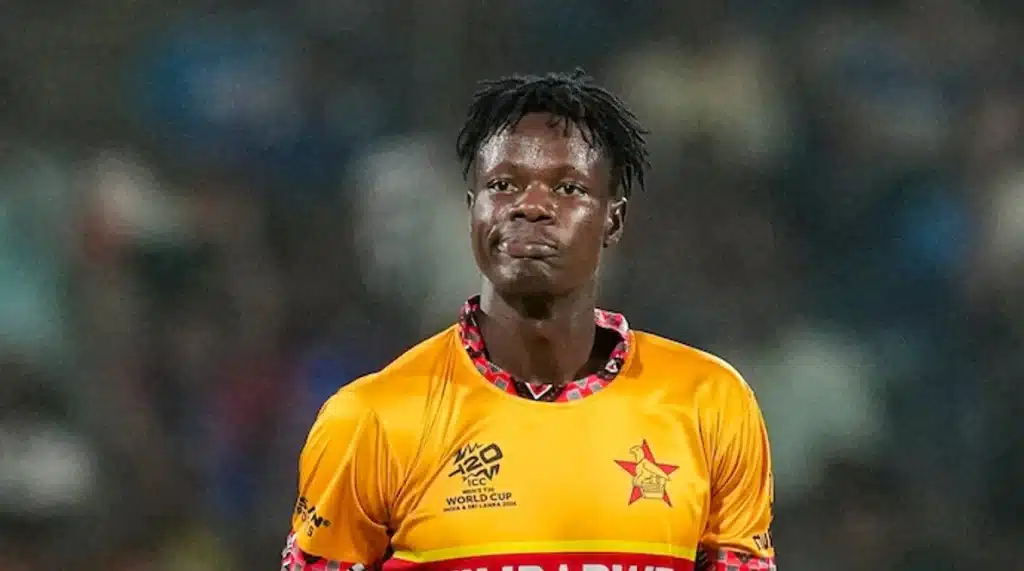
| Blessing Muzarabani | Islamabad United | Kolkata Knight Riders | ₹75 lakh |
| Dasun Shanaka | Lahore Qalandars | Rajasthan Royals | ₹2 crore |
| Spencer Johnson | Quetta Gladiators | Chennai Super Kings | ₹1.5 crore |
Several other players also pulled out of PSL squads, including Gudakesh Motie, Jake Fraser-McGurk, Ottneil Baartman, Kyle Jamieson, Tymal Mills, David Wiese, and Rahmanullah Gurbaz.
The trend started in 2025 when South Africa’s Corbin Bosch left Peshawar Zalmi to join Mumbai Indians. The PCB handed him a one-year PSL ban and a fine.
PCB Chairman Mohsin Naqvi has warned of legal action against contract-breaking players. Still, he acknowledged the league cannot realistically compete with the IPL’s financial pull.
Why Shanaka’s Move Tells the Full Story
Dasun Shanaka was drafted by Lahore Qalandars for PKR 75 lakh (~₹22.5 lakh). He then left to join Rajasthan Royals for ₹2 crore as Sam Curran’s replacement.
That is roughly a 790% earnings increase by switching leagues.You can hardly blame the man.
Viewership: Numbers That Show the Scale
The IPL 2025 season reached a staggering 1 billion viewers across TV and digital, with a record 840 billion minutes of total watch time
The IPL 2025 final between RCB and Punjab Kings alone drew 31.7 billion minutes of watch time, becoming the most-watched T20 match in history.
JioHotstar recorded 384.6 billion digital minutes with a 29% year-on-year surge. Star Sports contributed 456 billion minutes on linear TV.
The PSL tells a different but still encouraging story.
PSL X (2025) reported 3.4 billion live streaming views and 48.5 billion cumulative streaming minutes, a massive 647% increase over PSL 9
PSL’s digital viewership grew from 3 million in 2017 to 38 million unique viewers by PSL 9, and jumped further in the 10th season
Viewership Comparison
| Viewership Metric | IPL 2025 | PSL X (2025) |
|---|---|---|
| Total Viewers | 1 billion | Not officially disclosed |
| Total Watch Time | 840 billion minutes | 48.5 billion streaming minutes |
| Digital Watch Time | 384.6 billion minutes | 48.5 billion minutes |
| Most-Watched Match | 31.7 billion minutes (Final) | Not disclosed |
| Streaming Growth (YoY) | 29% | 647% (vs PSL 9) |
| Broadcast Territories | 140+ | South Asia + select regions |
The PSL’s percentage growth is impressive, but the absolute numbers are worlds apart.
The IPL’s digital watch time alone (384.6 billion minutes) is roughly eight times the PSL’s total streaming minutes.
Teams and Tournament Format
The IPL currently features 10 teams, playing a double round-robin format of 74 league-stage matches, followed by playoffs and a final.
The season runs roughly two months, from late March to late May.
The PSL expanded to 8 teams in 2026 after operating with six franchises for its first decade.
The two new teams, Hyderabad Kingsmen and RawalPINDIZ (Sialkot), were sold for approximately $6.25 million and $6.6 million respectively.
For context, even the lowest-valued IPL franchise (Lucknow Super Giants at $122 million) is worth over 18 times more than a new PSL team.
IPL Teams (2026)
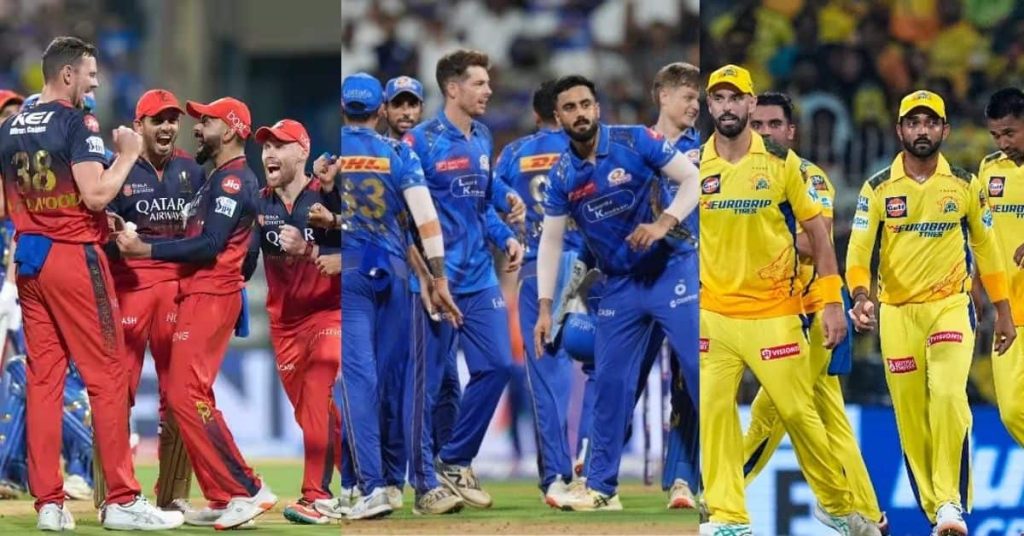
Chennai Super Kings, Mumbai Indians, Royal Challengers Bengaluru, Kolkata Knight Riders, Rajasthan Royals, Sunrisers Hyderabad, Delhi Capitals, Punjab Kings, Gujarat Titans, Lucknow Super Giants
PSL Teams (2026)
Lahore Qalandars, Islamabad United, Karachi Kings, Peshawar Zalmi, Multan Sultans, Quetta Gladiators, RawalPINDIZ, Hyderabad Kingsmen
One notable development: PSL 2026 matches will initially be held behind closed doors in only Karachi and Lahore, due to geopolitical tensions and a fuel crisis. The original plan included six cities.
Champions and Historical Records
Here are the Historical Records that Fans Should Know:
IPL Title Winners
| Team | Titles | Years |
|---|---|---|
| Mumbai Indians | 5 | 2013, 2015, 2017, 2019, 2020 |
| Chennai Super Kings | 5 | 2010, 2011, 2018, 2021, 2023 |
| Kolkata Knight Riders | 3 | 2012, 2014, 2024 |
| Rajasthan Royals | 1 | 2008 |
| Sunrisers Hyderabad | 1 | 2016 |
| Gujarat Titans | 1 | 2022 |
| Royal Challengers Bengaluru | 1 | 2025 |
| Deccan Chargers | 1 | 2009 |
PSL Title Winners
| Team | Titles | Years |
|---|---|---|
| Lahore Qalandars | 3 | 2022, 2023, 2025 |
| Islamabad United | 3 | 2016, 2018, 2024 |
| Peshawar Zalmi | 1 | 2017 |
| Quetta Gladiators | 1 | 2019 |
| Karachi Kings | 1 | 2020 |
| Multan Sultans | 1 | 2021 |
Interestingly, the PSL has had six different champions across its first ten seasons. That suggests better competitive balance than the IPL, where Mumbai Indians and Chennai Super Kings have long dominated.
Key Player Records
| Record | IPL | PSL |
|---|---|---|
| Most Runs (Career) | Virat Kohli: 8,661 | Babar Azam: 3,792 |
| Most Wickets (Career) | Yuzvendra Chahal: 221 | Hasan Ali : 125 |
| Highest Individual Score | Chris Gayle: 175* (2013) | Jason Roy: 145* (2023) |
Multi-League Ownership: IPL’s Growing Influence
One factor that does not get enough attention is the multi-league ownership model that IPL franchises have built.
IPL team owners now run franchises in SA20 (South Africa), ILT20 (UAE), Major League Cricket (USA), and The Hundred (England).
For overseas players, signing with an IPL franchise often opens doors to contracts across multiple leagues in a single year.
The PSL has no equivalent ecosystem. A PSL contract is just that: a PSL contract.
There is no pipeline to sister leagues or year-round franchise cricket. This multi-league network significantly strengthens the IPL’s appeal.
PSL’s Shift to Auction Model: A Step Forward
One major reform in 2026 is the PSL’s shift from a draft-based system to an auction model, mirroring the IPL’s approach.
Previously, PSL players were picked through a draft with fixed salary categories. The highest-paying Platinum category capped individual salaries at $300,000.
The new auction model allows market-driven pricing within a team salary cap of $1.6 million per franchise.
While the budget is still tiny compared to the IPL’s ₹120 crore per team, the auction system brings transparency and competitive bidding to the PSL for the first time.
It is a smart structural move that could help the league grow its commercial appeal over time.
The Scheduling Problem: Can Both Leagues Coexist?
The root cause of the player exodus is the scheduling overlap between PSL and IPL.
In 2025, the Champions Trophy in Pakistan pushed the PSL into the March–April window. In 2026, the T20 World Cup did the same.
With no dedicated window for the PSL on the ICC calendar, the league keeps bumping into the IPL.
PCB Chairman Mohsin Naqvi has said rescheduling is not feasible due to the packed cricket calendar.
Until a permanent solution emerges, the PSL will continue losing overseas players whenever the two tournaments collide.
The real fix would require ICC-level coordination, with dedicated windows for major T20 leagues. Given the complex politics of world cricket, that seems unlikely anytime soon.
More Related Topics:
Conclusion: IPL is Ahead in Each Aspect Compared to PSL
The IPL vs PSL debate has a clear financial winner, and it is not close.
On revenue, salaries, brand value, viewership, and global reach, the IPL operates in a completely different tier.
However, cricket is not only about money. The PSL brings intense competition, raw fast bowling, and a platform for Pakistani talent that no other league provides.
Both leagues contribute to T20 cricket’s growth in their own ways. As a fan, you get two distinct flavours of the game running simultaneously.
The numbers don’t lie, but neither does the passion.