Pakistan Cricket Board chairman Mohsin Naqvi made a bold statement on April 5, 2026. Speaking at the 82nd Board of Governors meeting in Lahore, he said the Pakistan Super League will soon become the world’s number one cricket league.
But the financial numbers behind both leagues tell a very different story.
Naqvi’s Bold Claim
Pakistan Cricket Board (PCB) chairman Mohsin Naqvi made a bold statement at the 82nd Board of Governors meeting held at Gaddafi Stadium in Lahore on April 5, 2026.
“The PSL has now become the best market for investment,” Naqvi said. “The time is not far when the PSL will become the world’s number one league.”
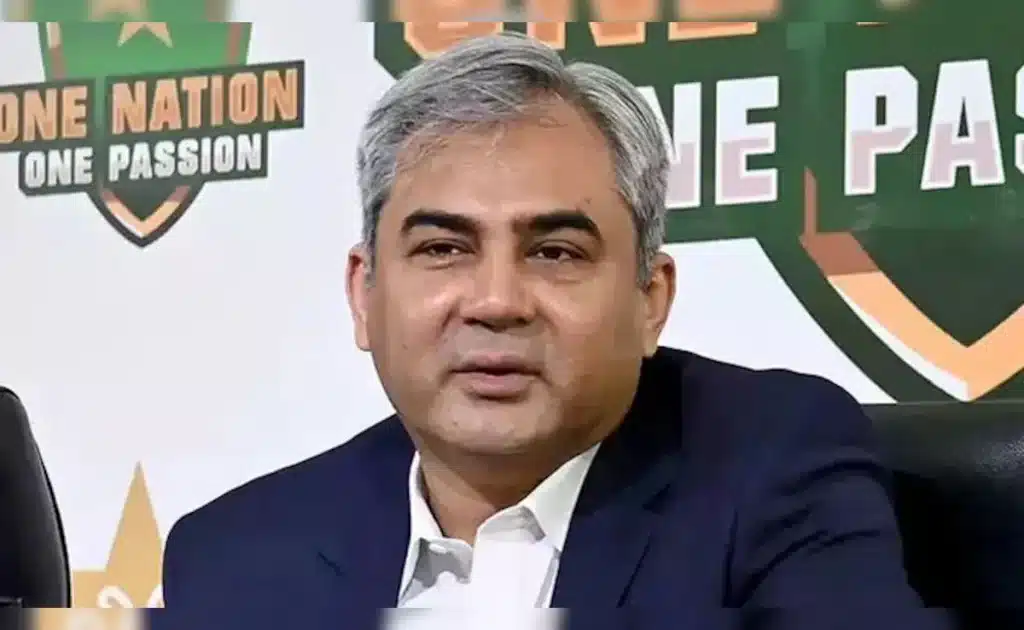
Naqvi pointed to growing investor interest and a strong response to the PSL franchise auction as signs of the league’s progress.
The franchise auction attracted record bids as the PSL expanded from six to eight teams, adding new franchises from Sialkot and Hyderabad. OZ Developers won the Sialkot franchise for PKR 1.85 billion, naming it Sialkot Stallionz, while FKS Group acquired the Hyderabad team for PKR 1.75 billion, calling it Hyderabad Kingsmen.
PSL 2026: Playing Under Tough Conditions
Naqvi’s claim comes at a difficult time for the PSL. The PSL this season is being held behind closed doors at two venues due to a fuel crisis in Pakistan. In contrast, the IPL is being played across multiple venues with spectators in attendance.
No crowd means no ticket revenue, which hurts the league’s overall earnings.
The Valuation Gap
The numbers show a large difference between the two leagues.
At present, the IPL stands as a global sporting powerhouse with an estimated valuation of $18.5 billion, making it one of the richest sports leagues in the world. In comparison, the total valuation of all PSL franchises combined is estimated at around $260 million, which is a fraction of the IPL’s worth.
The gap is even clearer when looking at individual franchises. In 2026, Royal Challengers Bengaluru reportedly touched a valuation of $1.78 billion, which alone is nearly seven times the value of the entire PSL ecosystem. Meanwhile, PSL’s newer teams such as Hyderabad and Sialkot were sold for just over $6 million each.
Media Rights: Where the IPL Truly Dominates
The biggest difference between the two leagues is in their broadcast deals.
The IPL’s 2023-2027 broadcast deal is valued at approximately $6.4 billion. This translates to about $13.4 million per match, placing it second globally on a per-match basis, behind only the NFL. By contrast, the PSL’s latest domestic broadcast deal, secured for the 2026-2029 cycle, is worth about $93 million over four seasons.
In simple terms, a single IPL match earns more in media revenue than the PSL’s entire four-year broadcast deal covers proportionally.
Annual Revenue and Prize Money
On an annual basis, the IPL generates over $1 billion in revenue, whereas the PSL brings in close to $60 million.
The prize money gap follows the same pattern. An IPL-winning team earns nearly five times more than a PSL-winning team.
The PCB has introduced a $200,000 development award for the franchise that contributes the most to grassroots cricket, signalling a focus on long-term growth rather than directly competing with IPL-level payouts.
Player Pull: IPL Wins That Battle Too
The PSL also struggles to hold on to top international players. While some players not picked in the IPL join the PSL, IPL franchises often sign them as replacements even during the season.
Financially, IPL contracts greatly exceed those of the PSL, with a single IPL deal sometimes equal to an entire PSL team’s budget. Notably, players like Blessing Muzarabani, Dasun Shanaka, and Spencer Johnson chose the IPL over the PSL, despite initially considering PSL engagements.
Where PSL Ranks Globally
A recent ranking by the World Cricketers’ Association reflects this difference. The PSL is placed fifth with 48 points, while the IPL sits in third place with 62.2 points. Ahead of both are The Hundred with 75.2 points and SA20 with 68 points.
What It All Means
Mohsin Naqvi’s confidence in the PSL is clear. The league has grown, the franchise auction showed strong interest, and digital viewership is rising. But the financial numbers in 2026 paint a very different picture from his claims.
For the PSL to realistically challenge the IPL, it will need sustained growth in media rights, sponsorship, infrastructure, and global reach. That is a long road, and based on current figures, the gap remains very wide.