Cricket ranks among the world’s most watched and beloved sports. Yet placing bets on cricket matches remains off-limits in many countries. Both cricket-loving nations and countries with little interest in the sport have enacted strict betting bans.
Governments enforce these restrictions for various reasons. Some nations prohibit betting to honor religious teachings. Others worry about match-fixing scandals that could damage the sport. Many countries simply include cricket under their general gambling laws.
This article covers countries where cricket betting is subject to legal restrictions and explains why each nation chose this approach.
Cricket Betting Banned Countries
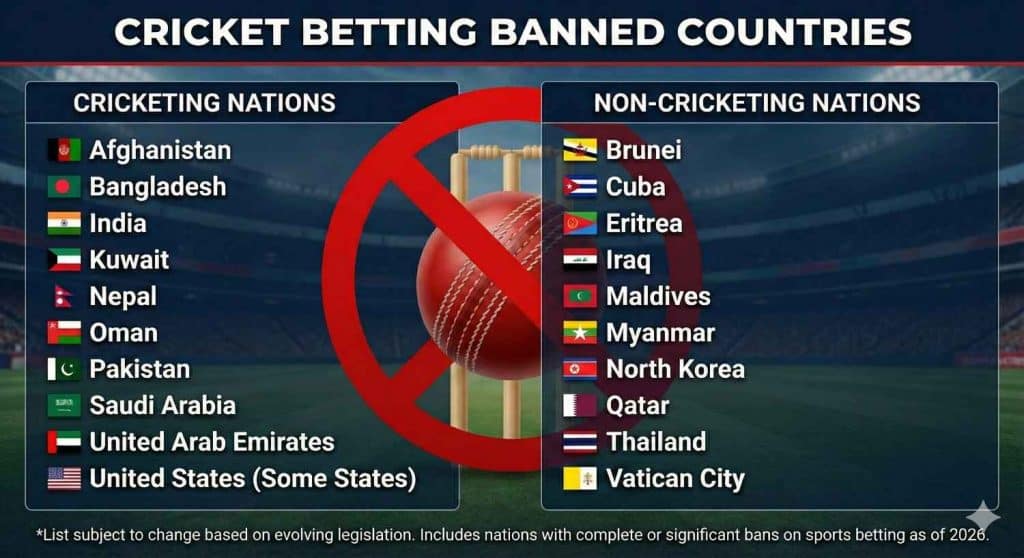
Here’s a table of 20 countries where cricket betting is banned:
| Cricketing Nations | Non-Cricketing Nations |
|---|---|
| Afghanistan | Brunei |
| Pakistan | Thailand |
| Bangladesh | United States |
| Malaysia | North Korea |
| Nepal | Vatican City |
| United Arab Emirates | Cuba |
| Saudi Arabia | Qatar |
| Iraq | Maldives |
| Kuwait | Eritrea |
| Oman | Myanmar |
10 Cricketing Nations That Banned Cricket Betting
Many cricket-obsessed countries still forbid betting on the sport. Religious beliefs, cultural values, and legal frameworks drive these decisions.
Here’s a look at the laws and motivations behind cricket betting bans in these ten nations:
1. Afghanistan
Afghanistan operates under Islamic law, which forbids all gambling activities. The country’s legal system draws heavily from Sharia principles. Authorities view betting as harmful to both individuals and society. Anyone caught gambling faces serious legal consequences.
2. Pakistan
Pakistan enforces one of the strictest gambling bans in the cricketing world. The Prevention of Gambling Act of 1977 makes all betting activities a criminal offense. Cricket enjoys massive popularity in Pakistan. However, officials refuse to allow betting because of concerns about corruption and match manipulation.
3. Bangladesh
Bangladesh treats gambling as a serious crime. The Public Gambling Act of 1867 laid the foundation for these restrictions. In 2025, lawmakers passed the Cyber Security Ordinance 2025 to target online betting platforms. People caught using betting apps or websites now face prison sentences of up to two years plus heavy fines of up to Tk 1 crore (10 million BDT). The government takes a firm “zero-tolerance” approach.
4. Malaysia
Malaysia combines civil and religious law to prohibit cricket betting. The Common Gaming Houses Act of 1953 prohibits sports betting for all citizens. Sharia law adds extra restrictions for Muslim residents. The country allows just one land-based casino. However, sports betting remains completely off-limits. Officials regularly block foreign betting websites.
5. Nepal
Nepal restricts most forms of gambling through the Gambling Act of 1963. The law permits only certain casino operations. Sports betting, including wagers on cricket, falls outside these exceptions. The government aims to shield citizens from gambling addiction and financial ruin.
6. United Arab Emirates
The UAE has established the General Commercial Gaming Regulatory Authority (GCGRA) to regulate and license “commercial gaming,” which includes sports wagering and online gaming. While unlicensed betting remains a crime under the Penal Code, the UAE has begun issuing its first gaming licenses, such as the UAE Lottery in 2024 and the first physical casino license for Wynn Al Marjan Island. As of 2026, the UAE is transitioning toward a regulated, rather than totally banned, market for sports betting.
7. Saudi Arabia
Saudi Arabia maintains a complete ban on all gambling activities. The country’s legal system follows Sharia law without exception. Authorities treat gambling as a grave offense. Violators face harsh punishments, including fines and imprisonment. This blanket ban naturally covers cricket and all other sports.
8. Iraq
Iraq’s legal code prohibits gambling in all its forms. The government views betting as contrary to public morals. The Penal Code outlines penalties for gambling offenses. Sports betting, including cricket wagering, falls squarely within these prohibitions.
9. Kuwait
Kuwait bans gambling based on Islamic law. The government enforces these restrictions firmly across all sectors. Religious and cultural traditions drive this policy. Officials work hard to prevent any gambling activities from taking root. Cricket betting faces the same total prohibition as other wagering.
10. Oman
Oman prohibits gambling as part of its commitment to Islamic values. The legal system reflects these religious principles throughout. Betting on cricket or any sport violates the law. The government sees these restrictions as essential to maintaining social order.
10 Non-Cricketing Nations That Banned Cricket Betting
Several countries with little interest in cricket still ban betting on the sport. These nations typically prohibit all forms of gambling or sports betting.
Here’s how these ten non-cricketing countries approach the issue:
1. Brunei
Brunei enforces some of the toughest anti-gambling laws anywhere. The Common Gaming Houses Act covers all betting activities. Punishments range from steep fines to corporal punishment. The government permits no gambling, including bets on lesser-known sports such as cricket.
2. Thailand
Thailand’s Cabinet approved the Draft Entertainment Complex Act, which paves the way for legal casinos and integrated entertainment complexes. While the new law aims to legalize certain forms of physical gambling to boost tourism, online gambling remains strictly prohibited as of 2026. General sports betting outside of licensed complexes also remains restricted under the aging Gambling Act.
3. United States
Sports betting laws in the U.S. vary by state. As of 2026, 31 states plus D.C. now permit some form of online sports wagering, while several others allow in-person betting only. However, major states like Texas and California maintain restrictions. In fact, as of January 1, 2026, California enacted a ban on sweepstakes-model “social sportsbooks,” further tightening restrictions. Cricket betting remains illegal in these restricted states. The sport’s small following in America means there are few betting markets.
4. North Korea
North Korea prohibits all gambling. The government controls nearly every aspect of daily life. This total control extends to betting on any sport. Cricket betting faces the same prohibition as all other gambling activities.
5. Vatican City
Vatican City forbids gambling based on Catholic moral teachings. The tiny city-state prohibits all forms of betting. Church leaders view gambling as spiritually and financially dangerous. This stance applies to all forms of sports betting.
6. Cuba
Cuba restricts most gambling under its socialist system. The government allows only certain state-run lotteries. Sports betting remains illegal across the board. Cricket has almost no presence in Cuba. Yet betting on the sport would violate existing gambling laws.
7. Qatar
Qatar enforces a complete gambling ban based on Islamic law. The government treats all betting as illegal. Religious and cultural values shape these policies. The 2022 FIFA World Cup brought global attention to these restrictions. Cricket betting faces the same prohibition as all other wagering.
8. Maldives
The Maldives prohibits all gambling as an Islamic nation. The legal system reflects religious principles on this issue. Sports betting of any kind violates the law. Tourists and residents alike must follow these rules. Cricket betting carries the same legal risks as other forms of gambling.
9. Eritrea
Eritrea maintains strict gambling laws. The government bans all forms of betting. Cricket has minimal presence in the country. Nevertheless, wagering on cricket or any sport remains illegal. Officials enforce these restrictions as part of broader social policies.
10. Myanmar
Myanmar restricts gambling through longstanding laws. The government permits only state-run lotteries. Sports betting falls outside these limited exceptions. Cricket has little following in Myanmar. Still, betting on the sport violates gambling regulations.
Suggested Read:
Conclusion: Cricket Betting Is Banned In Many Asian Countries
Cricket betting bans reflect a mix of religious beliefs, cultural values, and legal traditions. Cricket-loving nations often worry about protecting the sport from corruption. Countries with limited cricket presence typically include it under general gambling bans.
Online betting platforms create new challenges for enforcement. Digital technology makes it easier for people to place bets from anywhere. Governments struggle to block all foreign betting sites.
Some countries may eventually reconsider their positions. The economic benefits of regulated betting appeal to many policymakers. Yet religious and cultural objections remain strong in much of the world.
Understanding these laws matters for fans, players, and officials alike. As cricket expands into new markets, debates about betting will likely intensify. Finding the right balance between opportunity and protection will remain a challenge for years to come.