Betting on player performance gives you one of the most direct ways to get into sports betting. Unlike team bets, player prop betting puts the focus on one person’s numbers in a single game.
Sportsbooks spend less time on these markets, so the lines are not always right, and that is where you can find value.
This guide shows you how to read prop lines, which numbers to check, and what mistakes to avoid.
How To Bet On Player Performance? The Basics
A player prop is a bet on what one player will do in a game.
The most common format is the Over/Under, where you pick whether a player goes over or under a set number. You also get “To Score” or “To Achieve” markets.
These are yes/no bets: Will this player score a touchdown, or will this pitcher get a strikeout in the first inning?
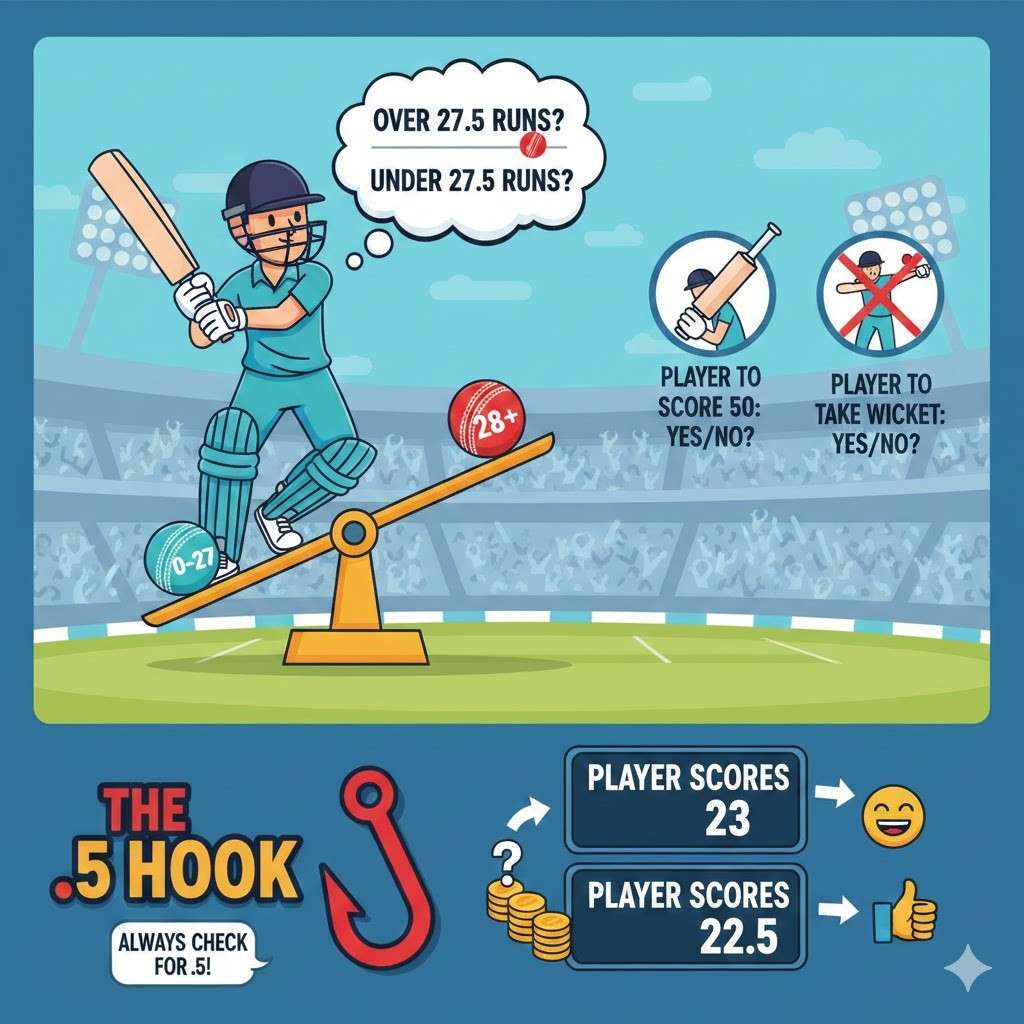
When you see a line like 22.5, that “.5” is called the hook. If the line were 23 and the player scored exactly 23, you get your money back. The hook makes sure there is always a winner.
Always check whether a line sits on a whole number or has a hook; it changes how you approach the bet.
Common Types of Player Performance Bets
The table below shows the most common player prop markets across major sports.
Start here because more data exists on these markets, which makes building a player prop betting strategy easier.
| Market Type | Primary Metrics (High Data) | Secondary/Value Props (Higher Risk) |
|---|---|---|
| Batting | Total Runs, Over/Under Runs | Total Sixes, Method of Dismissal |
| Bowling | Total Wickets, Top Bowler | Will a bowler take a 5-wicket haul? |
| General | Player of the Match | Player to win the Coin Toss |
Start with primary markets before you move to secondary props. Primary props carry more data.
Secondary props can give you value because books put less work into setting those lines.
Once you know what player props in sports betting look like across different sports, you can move between leagues without starting over each time.
How to Bet On Player Performance Like A Pro?
Three things matter most when you want to know how to bet on player performance: usage rate, matchup, and volume.
Usage rate means how much the ball is touched by the player on his team’s offense. A player averaging 18 points per game looks fine, but if a lineup change cut his usage, that number no longer tells the full story.
Matchup tells you who he plays against this week.
Volume is the most reliable of the three. If a player does not get on the field, he cannot put up numbers.
This is how to bet on player performance online with real logic behind it — not just a guess.
Bet With Correlation and Stacking
Correlation means two outcomes move together. When a quarterback has a big game, his wide receivers tend to put up numbers too.
The trap to avoid is negative correlation. This is when two bets work against each other. Betting two teammates to both score big in the same game is a good example.
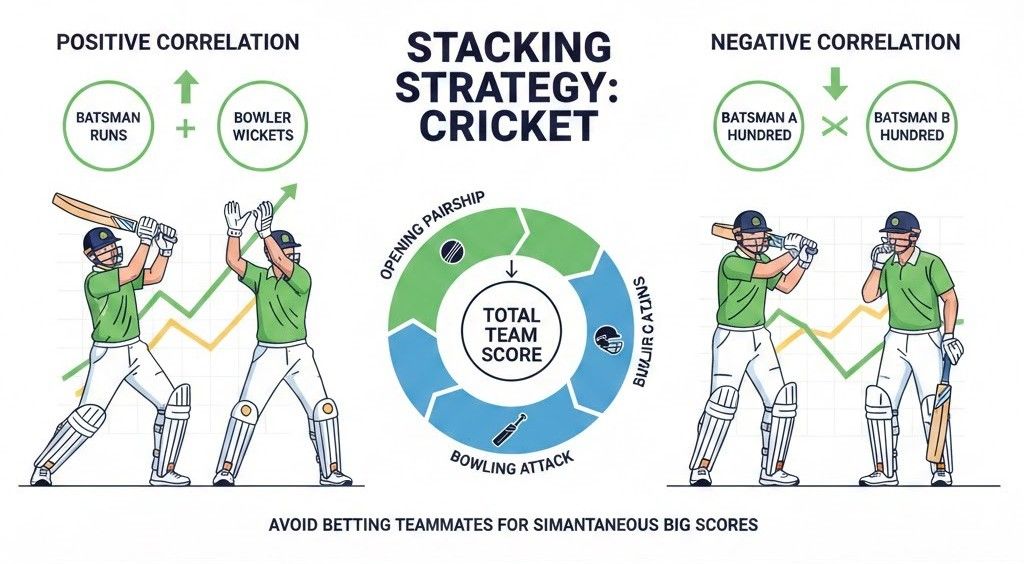
The ball cannot go to multiple players simultaneously. If one puts up big numbers, the other usually does not. A good bookmaker builds this into the lines, so you need to account for it too.
Using Advanced Metrics Over Surface Stats
Points per game give you a starting point, not a full picture. If you want to know how to bet on player performance with an edge, go one level deeper.
| Instead of | Look at this instead… | Why it matters |
|---|---|---|
| Last Match Runs/Wickets | Strike Rate & Economy | Shows the intensity and pressure a player exerts, regardless of the final total. |
| Season Batting Average | Match-ups (Entry Point) | A high average means little if a batsman struggles against the specific type of bowler they’ll face in the Powerplay. |
| Overall Career Stats | Venue & Pitch History | In cricket, the pitch is a “third player.” Some grounds are “high-scoring” (small boundaries) while others favor spin. |
Check Injury Reports on game day. One missing teammate can push a player’s value up or bring it down, depending on the role that teammate plays.
Surface stats tell you what already happened, while likely to happen next is shown by the predictive ones. Always bet on what is coming, not what already passed.
Also, look into live betting player props during a game. Once you see how pace and usage play out in real time, you can bet with more information than you had before the game started.
How to Bet On Player Performance: Managing Your Bankroll and Finding Value
Line shopping means you check more than one sportsbook before you place a bet. You want to find the number that gives you the most room to win.
One book might put a player’s line at 22.5 while another puts it at 23.5. That one point can decide whether you win or lose over time.
| Sportsbook | Player Line | Odds | Implied Probability |
|---|---|---|---|
| Book A | Over 20.5 | -110 | 52.4% |
| Book B | Over 21.5 | -110 | 52.4% |
| Verdict | Book A | Higher Value | 1-point cushion for the same price. |
Both books charge the same odds, but Book A gives you one extra point for free. That is real value. Always check the line at more than one place before you lock it in.
Also, make sure the platforms you use are safe. Knowing which are banned betting apps keeps you on books that are licensed and pay out when you win.
Common Mistakes to Avoid In Player Betting
Two mistakes show up more than any other.
The first is the Star Power Trap. You bet on a player because of his name, not because the matchup makes sense.
A well-known player going against a tough defense on a back-to-back night is still a bet that does not hold up. A name does not change the numbers.
The second is Recency Bias. A player scored 40 points last night, and you want to bet his “Over” again tonight. One game is not a pattern.
What matters is the setup, usage, matchup, and pace, not what just happened. The book already moved the line up after last night’s game. You get no value by chasing it.
Keeping in mind what player props in sports betting actually measure helps you stay on track. You bet on conditions and probability, not on stories.
Suggested Reads:
Conclusion: Research The Setup, Not The Name, To Win Player Props
To bet on player performance well, you need to do three things: check the right numbers, find the line with the most value, and avoid bets driven by emotion.
Props give you more room to find an edge than team bets do, but they punish bets made without research.
Pick one sport, track every bet you place, and grow from there. Starting small and staying focused will take you further than betting big on a feeling.
FAQs
Rules differ by book, but most require the player to take the field for the bet to count. If a player sits out, most books void the bet and return your stake.
Check volume numbers like minutes and snap counts, shop lines across books, and only bet on markets where you have done the research. Staying consistent matters more than chasing big payouts.
You raise your bet size after a loss and lower it after a win. It is a way to manage your bankroll, not a way to pick winners.
Books look at season averages, recent form, matchup data, and usage trends to set a line. The number reflects what the book expects the player to do in that game.
Cricket props are based on runs scored, wickets taken, or economy rate. Books look at batting average, strike rate, and pitch conditions to set those lines.